Showing posts with label dualism. Show all posts

Sunday, 25 March 2012

Bits of Descartes

Descartes – Self identity

survives death

Descartes – Disembodied consciousness

Descartes believes that we are constantly aware of everything around us; this is because our mind and personality live on after our physical body dies. He believes in a much more personal view on our rational mind. Descartes states that it is implied that our mind and memories carry on in an afterlife. He believes that once our body dies and decays the two substances of the mind and the body seperate. The body has extension and emotions compared to the mind which does not. Descartes is a rationalist.

Descartes: consciousness survives death.

Descartes: Disembodied Consciousness - As a substance dualist and the father of Cartesian Dualism, Descartes would argue that it is possible to have a conscious mind without a body, because mind and body are both ontologically distinct substances that differ in the very nature of their existence. When our ephemeral bodies die the eternal mind endures death and lives on, and is therefore still a conscious mind, but one without a body. For Descartes, this is our afterlife, and although his account of it is not very detailed, it is his example of disembodied consciousness.

Descartes (disembodied consciousness) – Descartes believes that the mind and body are ontologically distinct. The mind is non-physical and lacks motion, whereas the body is physical and has extension and motion. Descartes believes that once dead the rational part of out mind lives on.

Describe what Descartes believes about the mind in 77 words.

Descartes believes the mind is ontologically distinct from the body; they are separate because Descartes can have a clear and distinct idea of each one. The mind lets your body function through thought and that source of though comes from the rational part of our minds. He believes the mind is eternal and implies life after death for it but as he cannot prove it he does not say it will happen indefinitely. It’s also the soul

Describe what Descartes believes about the body in 43 words.

The body can influence the actions of the mind through the pineal gland because of the body’s passions. He also believes the body is like a machine as they have extension and motion but are subject to the laws of physics, nothing else.

Describe what Descartes believes about our self identity in 2 words.

Lives on.

Describe what Descartes believes about our disembodied consciousness in 91 words.

Descartes implies that our disembodied consciousness does exist and is eternal which means it shall live on after death. This is because Descartes was a Christian and so this has influences him because Christians believe that we as a person and what makes us us will move on to heaven of hell and exist there for eternity. So the only thing in Descartes theory that is not eternal is our body and that dies and decays as it is subject to the laws of physics but the rest does live on.

Descartes on self identity – It survives.

Descartes: Personality survives.

Descartes: As a substance dualist, Descartes believes the soul and body are two separate substances. This because Descartes says:

I can have a clear and distinct idea of the soul and body. Whatever I can think of as clear and distinct, god can create it clearly and distinctively so the soul and body must be ontologically distinct. Descartes believes that when we die our body dies, yet our soul is eternal and endures. As a christian, Descartes believes the soul is eternal and retains the personal identity but he can't prove this.

DESCARTES -> SELF-AWARENESS

Descartes, a 17th century rationalist and substance dualist believed that the mind and body are ontologically different, but they can interact. The mind has no motion or extension and does not follow laws of physics. Whereas the body has motion and extension and does follow the laws of physics. Descartes believed that the mind and soul survive after the death of the body but he never specified what happened to them after our death. Therefore Descartes believed that our mind lives on, possibly implying that we go to heaven, as well as our passions and consciousness

Descartes – Self Identity

They survive.


Bits of Plato

Plato-Self Identity
Plato believes that when our physical body dies our memories and personality go with them. However, our knowledge if forms don’t.

Plato – Disembodied consciousness
He believes that we are only aware of the physical world when we’re alive.

Plato (personality/memories) - Plato was a substance dualist who believed that once you’re your memories and personality are also lost; yet knowledge of the forms is reborn.

Describe what Plato believes about the mind in 67 words.
Plato believes the mind is ontologically distinct from the body, the body has completely separate qualities from the mind and so how can they be deemed as one thing? For instance the mind is eternal, immortal and imitable and so can exist after death. What happens when we die is our knowledge of the forms is reincarnated endlessly into other humans to be rediscovered forever and ever

Describe what Plato believes about the body in 92 words.
Plato believes the body is ontologically distinct from the mind and has no connection with it, however the body’s life processes can ‘clutter’ up the mind in a sense because our bodily functions take up our mind instead of our true knowledge of the forms which is what we are supposed to focus on. He believes our bodies exist in the physical world or ‘The realm of Shadows and Illusions’, basically saying that what our eyes perceive and our body’s feel are just illusions of the true knowledge of what’s real.

Describe what Plato believes about self identity in 20 words.
Plato feels our sense of our personal identity dies and decays with our body and our personal memories die too.

Describe what Plato believes about our disembodied consciousness in 9 words.
Our consciousness dies, our knowledge of the forms lives.

Plato on self identity – Plato believes that when our physical body dies, our memories and personality goes with it. However, knowledge of forms remain.
Plato: When the body dies, memories are lost and the personality dies. Our knowledge of the forms survives to be reincarnated.

PLATO -> SELF-IDENTITY
Half of mind is full of passions and memories of physical events that disappear when our mortal physical body dies

PLATO -> SELF-AWARENESS
All our physical memories die - as well as consciousness

Plato – Self Identity
Plato believes that when our physical body dies, our memories and personality goes with it. Knowledge of forms don’t.

Plato-personality

Personality dies with the body, only the knowledge of the forms lives on. The things that contain the mind must therefore live on as well. Plato also believes that the realm of ideas is the real world and that the physical world is just a shadow of the perfect world. Although Plato believes that the mind and body are separate he believes that personalities belong in the body, so die with it. The mind is reincarnated and is eternal whereas the body is mortal and ephemeral.

Thursday, 19 May 2011

Swinburne's Brain Hemisphere Thought Experiment


It's an attempt to show that mind and body MUST be separate things

It goes like this:

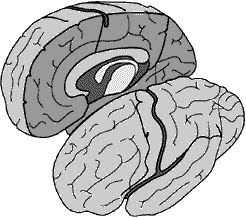
In theory, I could take the two hemispheres of your brain and put each one in a new body.

In theory, both of those bodies could be 'alive' - with half of your brain in each one.

In this situation, it'd be hard to say which one was really 'you' wouldn't it?... which one has your mind?

In theory, both could be conscious*

So where is your mind?

We're not sure are we?

So, I know exactly where all the bits of your body are

But, I'm not sure where your mind is

So, mind and body must be separate things mustn't they?

Therefore, this is support for substance dualism

(*in fact, there's some debate amongst scientist over whether the right hemisphere could ever really be conscious - but it doesn't control language, so how could we ask it anyway?)


Here's the argument in Swinburne's own words:

"Knowledge of what happens to bodies and their parts will not show you for certain what happens to persons. Let me illustrate this with the example of brain transplants.

The brain, as you will know, consists of two hemispheres, and a brain-stem. There is good evidence that humans can survive and behave as conscious being if much of one hemisphere is destroyed. Now suppose my brain (hemisphere plus brain-stem) was divided into two, and each half brain taken out of my skull and transplanted into the empty skull of a body from which a brain has just been removed; and there to be added to each half-brain from some other brain (e.g. the brain of my identical twin) whatever other parts (e.g. more brain stem) are necessary in order for the transplant to take and for there to be two living persons with lives of conscious experiences. Which of these two resulting persons would be me? Probably both would to some extent behave like me and make my memory claims; for behaviour and speech depend, at any rate in very large part, on brain-states, and there is very considerable overlap between the _information_ carried by the two hemispheres which gives rise to behaviour and speech. But both persons would not be me. For if they were both identical with me they would be the same person as each other (if a is the same as b, and b is the same as c, then a is the same as c) and they are not. They now have different experiences and lead different lives. There remain three other possibilities - that the person with my right half-brain is me, or that the person with my left half-brain is me, or that neither is me. But we cannot be certain which holds. It follows that that mere knowledge of what happens to bodies does not tell you what happens to persons.

It is tempting to say that it is a matter of arbitrary definition which of the three possibilities is correct. But this temptation must be resisted. There is a crucial factual issue here - which can be shown if we alter our thought experiment a little. Suppose that I am captured by a mad surgeon. He explains that he is going to perform this operation on my brain, in consequence of which there will be two living persons, one made partly out of my right brain hemisphere and the other made partly out of my left brain hemisphere. He announces that he will give one of these later persons ten million dollars and that he will subject the other one to torture. He allows me to choose which of the later persons will get ten million dollars and which will be tortured; that is, to choose whether the person who has my left half-brain will become a rich man while the one who has my right half-brain will suffer, or whether if will be the other way around.
How ought I to choose in order to become rich? It is evident that whether I shall survive the operation and whether my life will be happy or sad are factual questions. (Only someone under the grip of some very strong philosophical dogma would deny that), and yet, as I await the transplant and know exactly what will happen to my brain, each of the two choices would be very risky - if I choose that the person with my left half-brain will be rewarded, I do not know whether it will be me; and also, if I choose that the person with my right half-brain will be rewarded, I do not know if that person will be me.

And even after the operation no one will know for certain whether I have survived, or which of the later persons is me. Even if one subsequent person resembles the earlier me more in character and memory claims than does the other, that one may not be me. Maybe I've survived the operation but am changed in character and have lost much of my memory as a result of it, in consequence of which the other subsequent person resembles the earlier me more in his public behaviour than I do. And even if a fourth possibility, that they are both to some extent me, were (despite its apparent incoherence) correct, neither science nor philosophy could show that to us for certain, for all the evidence which could ever be obtained would be compatible with the other possibilities as well.

Reflection on this thought experiment shows that however much we come to know for certain about what has happened to my brain (and other parts of my body), and however much we come to know for certain about which mental properties are instantiated in which subsequent persons, we would not know for certain what has happened to me. What we would not know is which substance each of the later persons is. But since we do know - we may suppose - what has happened to each atom of my body, I must be different from my body. I must have a further essential immaterial part whose continuing in existence makes the brain (and so body) to which it is linked my brain (and my body), and to this something I give the traditional name of 'soul'. I am my soul plus whatever brain (and body) it is connected to. Normally my soul goes when my brain goes, but in unusual circumstances (such as when my brain is split) it is uncertain where it goes

Saturday, 30 April 2011

Plato

Plato’s theory is based on the idea that although we do have a body it is the mind that is the centre of our existence and of our awareness of self. Although we do have a body it is not as central to our being and unlike our mind it is part of our ephemeral world. After death the body decays however the mind has the ability to be reborn and has the ability to rediscover the forms. The forms are the ideas we have inborn into our mind however we can only discover them through reason and exploration of our mind. An example of this is the idea that we possess of a perfect circle. We have not ever experienced a perfect circle however have the knowledge of what one is -this is a form. The idea in our minds which is perfect unlike the shallow copies present in the physical world. Our knowledge of the forms endures beyond death even though our personal experiences die with the body. Plato argues that the mind and body do both exist and are separate substances however he attaches more importance to the metaphysical mind than to the impermanent body. Plato does not clearly state how the body and the mind interact and only continues his belief that the mind is the most important feature of our existence as it is this that gives us intelligence and knowledge of the realm of the forms. This theory therefore supports the claim that the relationship between mind and body cannot be clearly defined or understood. Despite Plato’s clear outline of both the body and mind he does not reach a conclusion as to how the two work together even though they are two separate substances.

Descartes

An example of dualism is Cartesian Dualism proposedd by Descartes. He distinguished the body as having properties of extension, and motion which is subjugated by the laws of physics, whilst the mind is non-material without extension and free of influence by the laws of physics. He believed he could prove this by the fact that he had a clear and distinct idea of himself as a thinking non-extended thing, whilst he had a clear and distinct idea of his body as a non-thinking extended thing. He believed that anything he could think of distinctly, God can create distinctly, therefore meaning that the mind and body are distinct from each other. Since he believed that the mind and body are ontologically different in their nature, he was a substance dualist and believed that the mind could exist separately from the body since it is a different substance from the body and thus does not rely on the body. He proposed that the mind controls the body, which he considered to be like a machine. Nevertheless the body can also affect the rational mind, such as with desires of the flesh. He proposed that this interaction was through the pineal gland in the brain. He believed that only humans had souls, which incumbent the mind, and that this soul lives after the death of the body, as it is not bound by nature, because of this Descartes believed it to be immortal, and to live on afterwards without a body.

Sunday, 24 April 2011